
16-Sep-2026
Joint Pain? Don’t Just Blame Age: Understanding the Real Causes
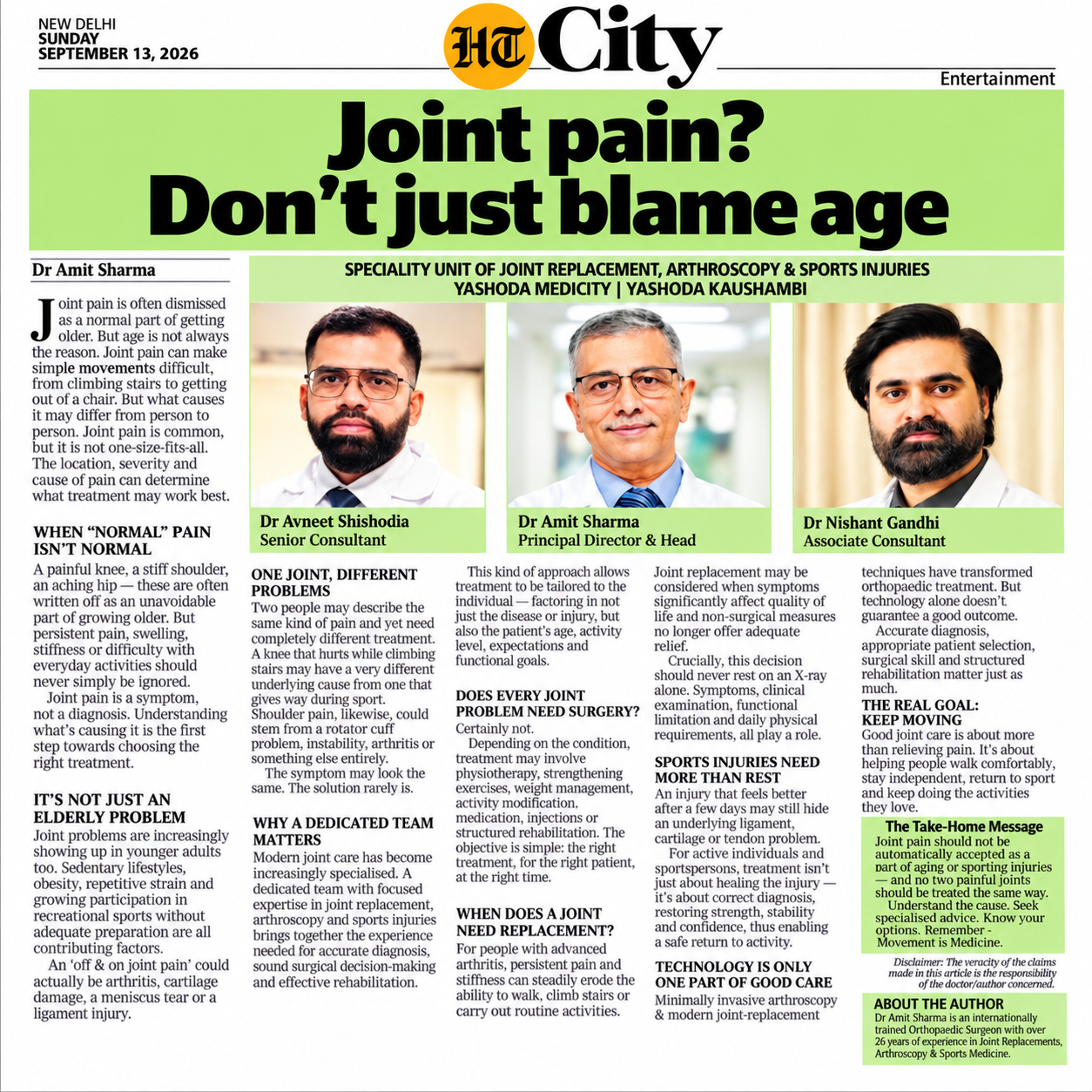
Joint pain is often considered a normal part of ageing, but persistent pain should not simply be ignored. As highlighted in the recent Hindustan Times City feature, joint problems can affect people of different ages and may have several underlying causes. Understanding the reason behind the pain is an important first step towards choosing the right treatment.
When Is Joint Pain Not Normal?
A painful knee, stiff shoulder, or aching hip can make everyday activities such as walking, climbing stairs, exercising, or getting up from a chair difficult. While occasional discomfort may occur after physical activity, persistent pain, swelling, stiffness, or difficulty with movement deserves proper medical evaluation.
Joint pain is a symptom rather than a diagnosis. Arthritis, cartilage damage, ligament injuries, meniscus tears, sports injuries, and other musculoskeletal conditions can all cause similar symptoms.
Joint Problems Are Not Limited to Older Adults
Joint-related problems are increasingly being seen in younger individuals as well. Sedentary lifestyles, obesity, repetitive strain, and participation in recreational or competitive sports can contribute to joint problems.
For an active person, pain may sometimes be related to an injury involving a ligament, cartilage, or tendon rather than age-related degeneration. This is why identifying the exact cause is important before deciding on treatment.
The Same Pain Can Have Different Causes
Two people may experience pain in the same joint but require completely different treatment. For example, knee pain while climbing stairs may have a different underlying cause from knee pain that develops after a sports injury.
Similarly, shoulder pain may result from a rotator cuff problem, instability, arthritis, or another condition. A proper clinical examination helps an orthopedic specialist understand what may be causing the symptoms.
Does Every Joint Problem Need Surgery?
Not every joint problem requires surgery. Depending on the condition, treatment may include physiotherapy, strengthening exercises, weight management, activity modification, medication, injections, or structured rehabilitation.
Surgery may be considered when a condition is advanced or when pain and functional limitations continue despite appropriate non-surgical treatment. The decision should be based on the patient's symptoms, examination, lifestyle, physical requirements, and overall health—not simply an X-ray report.
Sports Injuries Need More Than Rest
An injury that feels better after a few days may still involve damage to a ligament, cartilage, or tendon. For active individuals and sportspeople, returning to activity without proper assessment can sometimes lead to recurring problems.
Dr Amit Sharma is also an active endurance athlete who participates in Marathons, Triathlons, Table Tennis and club-level Cricket. His personal involvement in sports adds practical experience in understanding the specific needs and challenges associated with sports injuries.
Diagnosis, rehabilitation, strength, stability, and gradual return to activity are important parts of sports injury management.
Why Experience and Individualised Care Matter
Modern orthopedic care involves more than treating an X-ray or a particular joint. Treatment needs to be tailored to the individual, considering their age, activity level, expectations, and functional goals.
Dr Amit Sharma is an internationally trained orthopedic surgeon with over 25 years of experience, specializing in Joint Replacement, Arthroscopy and Sports Injuries. He served as Head of Department, Orthopedics at Dr Hedgewar Hospital, Delhi, for eight years.
His professional training includes a Fellowship in Replacement Surgery, Arthroscopy & Sports Injuries from Sydney and a Synthes Fellowship in Minimally Invasive Trauma Surgery from Seoul. He has also completed a PG Diploma in Sports & Exercise Medicine from the University of South Wales, England.
Currently, Dr Sharma is Principal Consultant, Orthopedics at Yashoda Super Speciality Hospital, Kaushambi, Ghaziabad, with a special interest in Joint Replacements and Arthroscopy.
The Real Goal: Keep Moving
The purpose of joint care is not simply to reduce pain. It is also about helping people maintain mobility, independence, strength, and the ability to participate in everyday activities.
Persistent joint pain should therefore not automatically be dismissed as a consequence of ageing. Understanding the cause, getting an appropriate evaluation, and choosing treatment according to individual needs can help support healthier and more confident movement.
Frequently Asked Questions About Joint Pain
1. Is joint pain always a sign of ageing?
No. Joint pain can affect people of different ages. Arthritis, sports injuries, cartilage damage, ligament problems, repetitive strain, and other conditions can cause joint pain. Persistent pain should be properly evaluated rather than automatically being considered a normal part of ageing.
2. When should I see an orthopedic surgeon for joint pain?
You should consider an orthopedic consultation if joint pain persists, keeps returning, or is associated with swelling, stiffness, instability, or difficulty walking and performing daily activities. Early evaluation can help identify the underlying cause and determine appropriate treatment options.
3. Does every joint problem require surgery?
No. Many joint conditions can initially be managed with non-surgical approaches such as physiotherapy, strengthening exercises, activity modification, weight management, medication, or rehabilitation. Surgery may be considered when the condition is advanced or symptoms continue despite appropriate conservative treatment.
4. Can sports injuries cause long-term joint problems?
Yes, some sports injuries involving ligaments, cartilage, tendons, or other joint structures may cause ongoing symptoms if not properly assessed and managed. Appropriate diagnosis, rehabilitation, strengthening, and a gradual return to activity can be important for recovery.
5. How can I maintain healthy joints as I age?
Regular physical activity, maintaining a healthy weight, building muscle strength, protecting joints during exercise, and addressing persistent pain early can support joint health. The right exercise and activity level may vary depending on an individual's age, fitness, and existing joint condition.